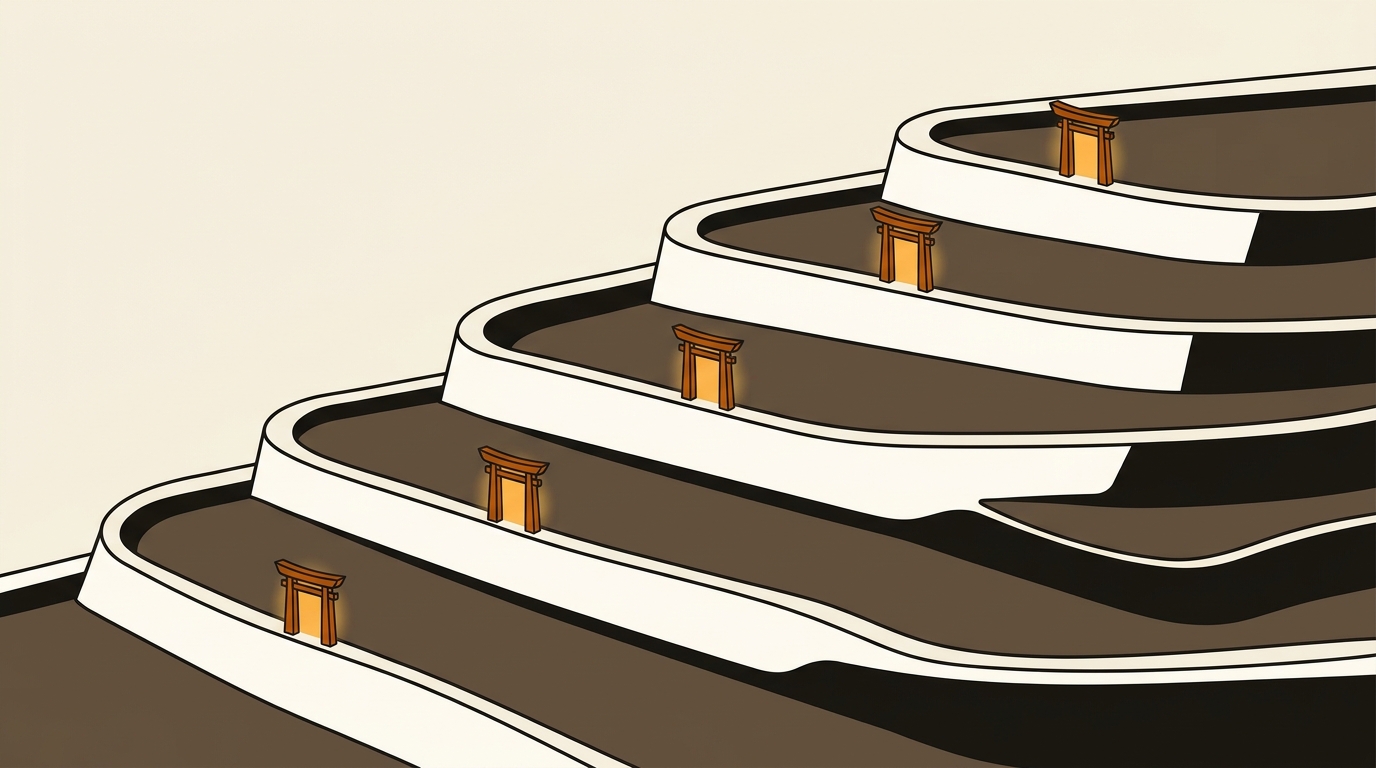
Why phase a campus at all
Rinchen's approach to phased AI data center development starts with a small, verifiable commitment rather than a single large bet. The published path runs from a 10 MW pilot toward a longer-range 100 MW campus, with each expansion sized to what the previous phase actually proved out — power delivered, fiber connected, demand contracted — rather than what a forecast said should happen next. The design targets behind that path are stated plainly as targets: PUE below 1.3, rack density up to 100 kW, and a 20-30% target CAPEX advantage versus conventional data center construction. These are design targets, not completed-project performance, and they require independent diligence before anyone treats them as delivered numbers.
The logic for phasing isn't unique to Rinchen — most credible AI infrastructure plays now describe some version of a MW ramp. What differs is what triggers the next MW. A phased 10 MW to 100 MW data center only earns that label if growth is gated on verified evidence rather than optimism about future orders, which is why the ramp sits inside a five-gate decision structure rather than standing alone as the pitch.
The five stop/go decision gates
Each phase of the campus passes through five stop/go decision gates before capital or construction commits further: site and power, demand, design, capital, and scale. Site and power confirms the grid connection, interconnection timeline and available capacity are real rather than assumed. Demand confirms contracted, not projected, offtake exists for the capacity being added. Design confirms the engineering package — cooling loop, switchgear, rack layout — is validated against actual site conditions rather than a generic template.
Capital confirms financing is committed against the specific phase, not the whole campus at once, and scale confirms the prior phase actually performed against its targets before the next one is approved. This is the core differentiator behind Rinchen's AI data center decision gates: they are tied to verified power, fiber, safeguards and contracted demand at each step, not to a fixed calendar or a hopeful sales pipeline. A gate can hold a phase in place indefinitely if the evidence isn't there yet — that's the point of the structure, not a flaw in it.
Modules in months, not years
Conventional data center construction typically runs 24-36 months from design freeze to commissioning. Rinchen's modular approach targets a 3-6 month module deployment window after approvals — engineering, fabrication and site integration compressed by moving as much work as possible into repeatable, factory-built blocks rather than serial on-site construction. That target describes the module timeline once a phase has cleared its gates, not the full span from a first meeting to a commissioned campus, which still includes feasibility work, framework agreements, permitting and site preparation.
The distinction matters for anyone modeling a delivery schedule: a modular data center deployment timeline of months is a claim about how fast a validated, gated module moves once approved, not a claim about how fast the whole relationship from introduction to operating campus moves. Collapsing the two produces schedules nobody can actually hold to, which is exactly the kind of optimism the gate structure is designed to keep out of the plan.
Inside the platform
The physical system behind each module follows a fixed sequence: renewable grid power and switchgear feed a battery energy storage system (BESS) that manages grid flexibility and short-term load swings, which in turn feeds liquid-cooled GPU racks running up to the platform's target rack density. Heat generated at the rack is carried by coolant distribution units (CDUs) that manage loop heat transfer, then rejected to atmosphere through dry coolers. Because the blocks are designed as repeatable units, additional capacity can be added by replicating the same system rather than re-engineering it phase by phase.
A specific design choice matters here: the cooling system uses a double loop, keeping the rack-side (IT) coolant circuit physically separate from the facility-side heat-rejection circuit. That separation is what makes a liquid-cooled GPU data center campus serviceable at scale — the IT loop can be tuned and maintained around chip and rack requirements without every change cascading into the facility-side plant, and vice versa. It's a mechanical detail, but it's one of the reasons the rack density and PUE targets are credible as a package rather than as two numbers picked independently.
Matching compute products to each phase
The five decision gates don't just protect capital — they also shape which compute product a given phase of capacity is suited to sell. Earlier, smaller phases tend to fit GPU-as-a-Service (hourly or monthly access for flexible training and inference) or reserved AI clusters (dedicated capacity planned around a specific model roadmap, security profile and deployment window), because both can be sized against a single contracted customer or a small set of customers without requiring the full ramp to be built first.
As a campus clears later gates and scale increases, the fit shifts toward IaaS & bare metal for customers who need reserved virtual machines or physical servers, wholesale capacity for cloud operators, neoclouds and regional infrastructure platforms buying power-backed supply at volume, and colocation & hosting for customers bringing their own liquid-cooled hardware. None of these are mutually exclusive at a given site — but matching product to phase is part of what keeps the demand gate honest, since a wholesale or colocation commitment at 80 MW is a different diligence question than a reserved cluster at 10 MW.
Why Bhutan
None of this delivery model depends on Bhutan specifically, but the country's own policy direction makes it a reasonable place to run it. Bhutan's National AI Strategy, published in 2025, names energy-efficient high-performance computing, GPU clusters, robust networks and sustainable power among its national enablers — the same categories a phased AI data center development plan has to get right regardless of location. Supplied market materials cited on the Rinchen site estimate more than 250 GW of new global data-center capacity planned by 2030, with roughly 100 GW considered a serviceable segment and a 5-8 GW long-range ambition for Rinchen; these are company estimates, not independently verified figures, and are presented here as market context that still requires its own diligence.
What Bhutan stands to gain from hosting a gated, phased build is more specific than hosting capacity for its own sake: digital export revenue from selling computation while the infrastructure stays in the country, a sovereign AI reserve of Bhutan-controlled capacity set aside for public services, research and Dzongkha-language AI, quality technical jobs in engineering, operations, cybersecurity and AI supported by local training, and a bankable power customer that helps the country build a long-term demand case around its own verified power and grid capacity. Each of those benefits, like the capacity ramp itself, is scaled to what the gates actually confirm at each phase — not promised in full against the pilot alone.
